Foreign Trade Zone vs Bonded Warehouse: Which Option Fits Your Business?
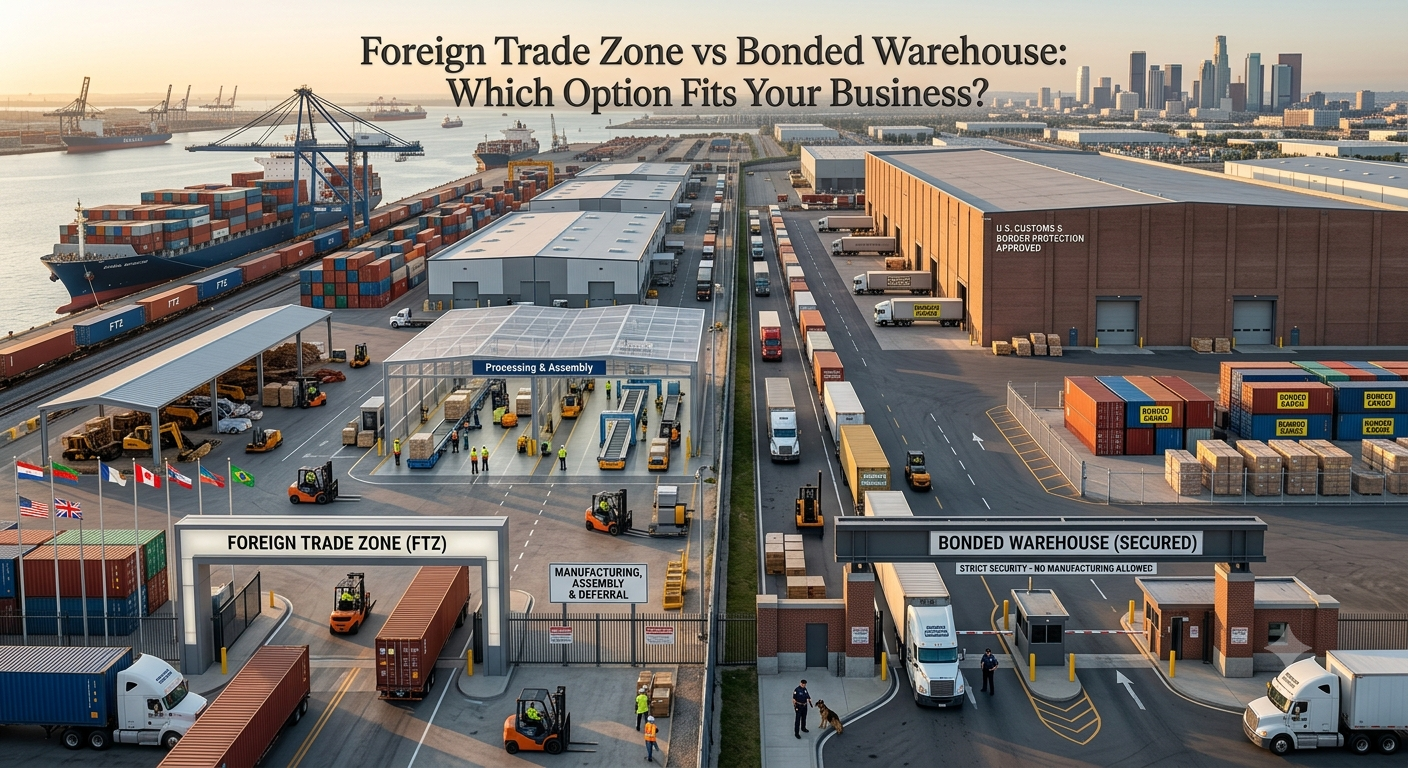
Foreign Trade Zone vs Bonded Warehouse
International trade offers tremendous opportunities for businesses looking to expand their reach, reduce costs, and improve supply chain efficiency. However, companies involved in importing and exporting goods often face one important decision before products even reach the marketplace. Should they use a Foreign Trade Zone or a bonded warehouse?
Both options provide valuable customs benefits, but they operate differently and serve different business needs. Understanding these differences can help you make smarter decisions that improve cash flow, simplify compliance, and support long term growth.
At American Trade Bridge, we help businesses navigate complex international trade regulations while identifying solutions that match their operational goals. Whether you import raw materials, finished products, or components for manufacturing, selecting the right customs program can make a measurable difference.
Understanding Foreign Trade Zones
A Foreign Trade Zone, commonly called an FTZ, is a secure area located within the United States but considered outside U.S. Customs territory for duty purposes. Imported merchandise can enter an FTZ without immediate payment of customs duties.
Products may be stored, assembled, manufactured, tested, repackaged, relabeled, or processed while remaining inside the zone. Customs duties are generally paid only when the goods officially enter U.S. commerce.
If products are exported directly from the FTZ to another country, businesses often avoid paying U.S. customs duties altogether.
Foreign Trade Zones are particularly beneficial for manufacturers, distributors, and companies managing high volumes of imported inventory.
Understanding Bonded Warehouses
A bonded warehouse is a secured storage facility approved by customs authorities where imported goods may be stored before customs duties are paid.
Unlike an FTZ, a bonded warehouse is primarily designed for storage rather than manufacturing or extensive processing. Although certain activities such as packaging, labeling, or limited manipulation may be permitted, significant manufacturing operations are generally restricted.
Goods may remain in a bonded warehouse for several years, depending on customs regulations, allowing importers to delay duty payments until products are released into the domestic market.
This option is especially useful for businesses that import seasonal products or maintain inventory for future sales.
The Primary Difference
Although both programs postpone duty payments, their capabilities differ considerably.
Foreign Trade Zones allow a much wider range of activities beyond simple storage. Companies can manufacture products, assemble components, inspect inventory, conduct quality control, and perform value added operations before paying customs duties.
Bonded warehouses focus mainly on secure storage with limited handling activities.
The choice often depends on how your imported products move through your supply chain.
Duty Payment Advantages
One of the biggest reasons companies consider either option is duty deferral.
With an FTZ, duties are typically paid only when products enter the U.S. marketplace. If goods are exported directly from the zone, duties may never be paid.
Additionally, manufacturers using an FTZ may benefit from inverted tariffs. This occurs when the finished product carries a lower duty rate than the individual imported components used to manufacture it.
Bonded warehouses also allow businesses to delay paying duties until inventory leaves storage. However, they generally do not offer inverted tariff benefits because manufacturing activities are limited.
For companies importing large inventories, delaying duty payments can significantly improve working capital.
Manufacturing and Assembly Capabilities
Manufacturing flexibility is one of the defining advantages of a Foreign Trade Zone.
Businesses can import raw materials, assemble products, manufacture finished goods, package products, conduct inspections, and prepare shipments without immediately triggering customs duties.
This capability makes FTZs attractive for industries such as automotive manufacturing, electronics, pharmaceuticals, aerospace, and industrial equipment.
Bonded warehouses are much more restrictive. While certain minor operations may be permitted, full manufacturing processes are generally not allowed.
If your business imports components for production, an FTZ is often the stronger choice.
Inventory Management Benefits
Both options improve inventory management, but they do so differently.
Foreign Trade Zones allow companies to manage imported inventory more strategically by delaying duties until products are actually sold within the United States.
Businesses with large inventories, fluctuating demand, or multiple product lines often benefit from this flexibility.
Bonded warehouses provide secure storage for businesses that need additional time before entering products into U.S. commerce.
Seasonal retailers, luxury goods distributors, wine importers, and specialty food companies frequently use bonded warehouses to delay duty payments until inventory is needed.
Export Opportunities
Companies with significant export operations often gain substantial advantages from FTZ participation.
Products that are imported into an FTZ and then exported to another country generally avoid U.S. customs duties altogether.
This creates considerable savings for businesses serving international customers or distributing products across multiple global markets.
Bonded warehouses also support exports, but they lack many of the operational advantages that FTZs provide for manufacturers and value added processing.
Customs Compliance
Both Foreign Trade Zones and bonded warehouses require compliance with customs regulations, inventory tracking, recordkeeping, and periodic reporting.
FTZ operators typically maintain sophisticated inventory control systems because manufacturing and multiple product movements create additional reporting requirements.
Bonded warehouses also require strict documentation but generally involve simpler operational processes due to their storage focused nature.
Businesses should evaluate their ability to manage compliance responsibilities before selecting either program.
Which Businesses Benefit Most from Foreign Trade Zones?
Companies that frequently import large volumes of goods often find FTZs highly beneficial.
Manufacturers importing components from multiple countries can delay duty payments until finished products enter domestic commerce.
Businesses that reexport products internationally may eliminate duties entirely on exported merchandise.
Organizations handling complex supply chains often appreciate the operational flexibility, inventory management benefits, and potential tariff savings available through an FTZ.
Which Businesses Benefit Most from Bonded Warehouses?
Bonded warehouses are an excellent option for businesses whose primary need is secure storage while delaying customs duties.
Importers with seasonal inventory can store products until demand increases without immediately paying duties.
Companies uncertain about future domestic sales also benefit because they avoid paying duties until products actually enter the U.S. market.
Businesses with relatively simple import operations often find bonded warehouses easier to manage than FTZs.
Cost Considerations
Establishing and operating an FTZ generally requires greater investment than using a bonded warehouse.
Companies may need specialized inventory systems, compliance procedures, security measures, and administrative resources.
However, organizations with high import volumes frequently recover these costs through ongoing duty savings, improved cash flow, and operational efficiencies.
Bonded warehouses typically involve lower setup costs and simpler administration, making them attractive for smaller importers or businesses with straightforward storage requirements.
The overall financial benefit depends on import volume, inventory turnover, manufacturing activities, and export frequency.
Questions to Ask Before Choosing
Before selecting between an FTZ and a bonded warehouse, businesses should carefully evaluate their operational model.
Consider how often you import products, whether manufacturing or assembly occurs after importation, how much inventory you typically store, whether products are exported internationally, and how customs duties affect your cash flow.
Understanding these factors helps identify which solution delivers the greatest long term value.
Making the Right Decision
There is no universal answer because every business operates differently.
Companies focused on manufacturing, assembly, exports, and supply chain optimization often realize greater value from a Foreign Trade Zone.
Businesses primarily seeking secure storage with delayed duty payments may find a bonded warehouse to be the more practical and cost effective solution.
The right choice depends on your industry, operational complexity, import volume, compliance capabilities, and long term growth strategy.
Working with experienced international trade professionals can help ensure that your customs strategy supports your business objectives while minimizing unnecessary costs and regulatory risks.
Choosing between a Foreign Trade Zone and a bonded warehouse is an important strategic decision that influences customs costs, inventory management, operational flexibility, and overall supply chain performance. While both programs offer valuable duty deferral benefits, they serve different business models and operational requirements.
We work closely with importers, exporters, manufacturers, and distributors to evaluate trade programs that align with their business goals. At American Trade Bridge, our team provides practical guidance that helps companies improve customs efficiency, strengthen compliance, and maximize the benefits available through international trade programs. Whether you are expanding your global operations or refining your current import strategy, American Trade Bridge is committed to helping your business move forward with confidence.
