Understanding the FMC Approval Process
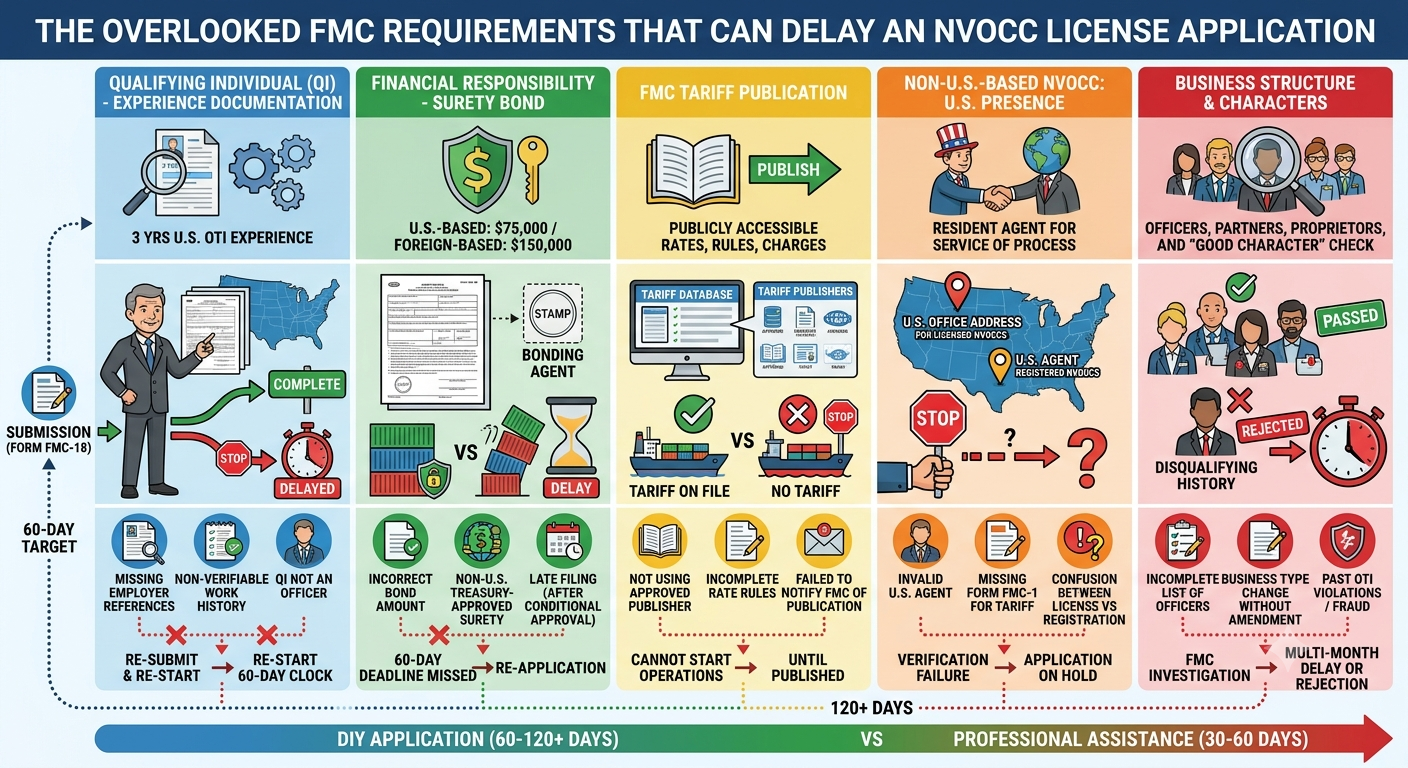
Applying for an NVOCC licence in the United States involves more than completing an application and submitting the required fee. The Federal Maritime Commission, commonly known as the FMC, expects applicants to satisfy several regulatory, financial, operational, and documentation requirements before they can operate as an ocean transportation intermediary. Some requirements are obvious, while others can easily be overlooked during the preparation process. Small inconsistencies in company information, financial responsibility documentation, or operational details can create unnecessary delays. Applicants may also underestimate the importance of ensuring that information submitted across different documents is consistent and accurate. At American Trade Bridge, we understand that careful preparation can help applicants approach the FMC process with greater confidence and fewer avoidable complications.
Correctly Identifying Your NVOCC Status
One of the first areas that applicants should examine carefully is how their business activities fit within the FMC's definition of an NVOCC. An NVOCC generally provides ocean transportation services without operating the vessels used to transport the cargo. The company may issue its own house bills of lading, arrange transportation with ocean carriers, and assume certain responsibilities associated with the shipment. Understanding the distinction between an NVOCC and other types of ocean transportation intermediaries is important when preparing an application. Incorrectly describing the company's activities can create questions about the type of authority or registration required. A clear explanation of the intended business model can therefore make the application process more straightforward.
Financial Responsibility Cannot Be Treated as an Afterthought
Financial responsibility is one of the most important areas of the FMC requirements for an NVOCC. Applicants generally need to demonstrate financial responsibility through an acceptable form of surety bond, proof of insurance, or other financial security permitted under the applicable regulations. The required amount can depend on whether the NVOCC operates as a licensed or registered entity and whether it operates in the United States or internationally. Errors involving the amount, form, provider, effective date, or filing details can prevent the financial responsibility requirement from being properly satisfied. It is therefore important to arrange the appropriate financial instrument before assuming that the application is ready for submission. A delay in establishing acceptable financial responsibility can affect the timing of the entire licensing process.
International and U.S. Operations Have Different Considerations
An applicant's intended geographic scope can affect the regulatory requirements that need to be considered. The FMC distinguishes between certain types of NVOCC operations, including entities that operate in the United States and those that operate as ocean transportation intermediaries from outside the United States. International NVOCCs may need to satisfy specific requirements relating to registration, financial responsibility, and the location of their business activities. Companies should therefore avoid relying on a generic NVOCC application checklist without first determining which regulatory category applies to them. The company's ownership structure and principal place of business should also be accurately represented throughout the documentation. Addressing these distinctions at the beginning can reduce the likelihood of having to revise the application later.
Business Information Must Match Across Every Document
Inconsistent company information is another overlooked issue that can cause unnecessary questions during regulatory review. The legal business name should match the company's formation records, application information, financial responsibility documents, and other relevant filings. Differences in abbreviations, punctuation, business names, addresses, or corporate details can create confusion even when the underlying information is correct. Applicants should also verify that their principal business address and contact information are current and consistently presented. If the company operates through subsidiaries, affiliated entities, or different trading names, those relationships should be clearly understood before documents are submitted. A final consistency review can identify discrepancies that might otherwise become avoidable sources of delay.
Registered Agents and Corporate Records Matter
Corporate structure is another area that deserves careful attention when preparing an NVOCC application. Depending on the company's structure and jurisdiction, corporate records may need to demonstrate who owns and controls the business. Information concerning officers, directors, partners, members, or other responsible individuals should be accurate and current. Companies that have recently changed ownership, reorganised their structure, or established a new entity should take additional care when preparing their documentation. The information supplied to the FMC should accurately reflect the legal entity that intends to conduct the NVOCC business. Keeping corporate records aligned with regulatory submissions can help prevent clarification requests during the review process.
Tariffs and Published Terms Should Be Prepared Properly
NVOCCs have regulatory responsibilities concerning tariffs and the terms under which their transportation services are offered. Depending on the applicable operating model and current FMC requirements, an NVOCC may need to publish or maintain tariff information covering its transportation services. Tariff preparation should not be left until the final stage of the application process because it may involve detailed commercial and operational information. Rates, charges, rules, accessorial fees, and other applicable terms need to be developed in a manner consistent with the company's intended services and regulatory obligations. Incomplete or poorly prepared tariff information can create additional work when the company is preparing to commence operations. Treating tariff preparation as part of the overall compliance process rather than a separate administrative task can improve readiness.
Service Contracts Require Careful Preparation
NVOCC service arrangements can involve detailed contractual requirements, particularly when dealing with shippers and ocean carriers. Service contracts, bills of lading, and other transportation documents should reflect the company's actual operating model and responsibilities. Companies entering the market should understand how their commercial agreements interact with FMC regulations before beginning operations. Using generic documents without reviewing whether they accurately reflect the company's role can create compliance concerns later. The wording of transportation documents should also avoid creating confusion about whether the company is acting as an NVOCC, freight forwarder, carrier, or another type of intermediary. Proper document preparation can help establish a consistent compliance framework from the beginning.
Ocean Carrier Relationships Should Be Clearly Defined
An NVOCC depends on relationships with vessel-operating common carriers to arrange ocean transportation for customers. Before commencing operations, the company should understand how its carrier relationships will work and what commercial arrangements are required. Documentation should clearly identify the respective responsibilities of the NVOCC and the ocean carrier. Applicants should also make sure that their planned services are compatible with the commercial and regulatory requirements governing those relationships. Confusion about carrier arrangements can become particularly problematic when an applicant has limited experience with U.S. ocean transportation regulations. Establishing a clear operational structure before applying can help reduce uncertainty once the company begins serving customers.
Bills of Lading Should Reflect the NVOCC Role
Bills of lading are central to NVOCC operations because the NVOCC may issue its own house bill of lading to the shipper. These documents establish important terms concerning the transportation of cargo and the responsibilities of the parties involved. A new NVOCC should ensure that its bill of lading format accurately reflects its legal and commercial role in the transportation transaction. The document should also be consistent with the company's tariff, service arrangements, and applicable regulatory requirements. Inconsistencies between customer-facing documents can create operational confusion and may require revisions before the business is fully prepared to operate. Reviewing these documents before submitting or commencing operations can therefore be an important part of compliance preparation.
Keep Compliance Information Current
Meeting the requirements at the time of application is only one part of maintaining NVOCC compliance. Companies must also be prepared to keep certain information current when business circumstances change. Changes involving ownership, company name, address, financial responsibility, operating arrangements, or other material information may require updates or additional regulatory action. Failing to recognise these obligations can create compliance problems after an application has already been approved. A new NVOCC should establish an internal process for monitoring regulatory information rather than treating compliance as a one-time event. This approach can help the business respond more effectively when its operations or corporate structure evolve.
Avoid Submitting an Incomplete Application
An application may appear complete while still containing missing or inconsistent information that requires additional clarification. Applicants should review every section carefully rather than focusing only on the major requirements such as financial responsibility and company registration. Supporting documents should be checked for accuracy, validity, signatures, dates, and consistency with the primary application. The applicant should also ensure that the business model described in the application matches the services it actually intends to provide. Taking time for a final compliance review can reveal issues that are difficult to identify after submission. A well organised application gives the regulatory review process a clearer picture of the applicant and its proposed NVOCC operations.
Build a Compliance Checklist Before Submission
A structured internal checklist can make the application preparation process considerably easier. The checklist should cover the company's legal identity, business structure, operating model, financial responsibility, addresses, ownership information, tariffs, transportation documents, and other applicable FMC requirements. Each item should be verified against authoritative regulatory information rather than relying solely on assumptions or outdated industry guidance. Documents should also be reviewed as a complete package so that information is consistent from one document to another. This process can be particularly valuable for companies entering the NVOCC sector for the first time. Careful preparation does not eliminate regulatory review, but it can reduce avoidable issues that commonly arise from incomplete or inconsistent submissions.
Prepare for Compliance Beyond the Licence
Obtaining NVOCC authority is an important milestone, but it should not be viewed as the end of the compliance process. An NVOCC must understand the regulatory responsibilities that apply to its continuing operations after approval. This includes maintaining required financial responsibility, following applicable tariff and documentation requirements, and keeping regulatory information accurate when circumstances change. The company should also establish internal procedures for handling customer documentation, carrier relationships, shipment records, and compliance reviews. Employees involved in ocean transportation should understand their responsibilities and know where to obtain current regulatory guidance. Building these practices early can create a stronger foundation for sustainable NVOCC operations.
Final Preparation Can Prevent Unnecessary Delays
The FMC application process requires attention to details that may not always receive sufficient attention during initial preparation. Financial responsibility, corporate information, operational classification, tariffs, transportation documents, and regulatory records all need to fit together accurately. Applicants should also remember that requirements can change, making it important to verify current FMC rules and guidance before submitting an application. A detailed pre submission review can identify inconsistencies before they become questions during regulatory processing. Professional preparation can also help a company understand which requirements apply specifically to its intended operating model. At American Trade Bridge, we focus on helping businesses approach the NVOCC licensing process with organised documentation and a clear understanding of the compliance requirements involved.
Moving Forward With Greater Regulatory Readiness
Preparing for an NVOCC licence is ultimately about more than completing forms and waiting for approval. It requires a clear understanding of the company's legal structure, transportation activities, financial responsibility, documentation, and continuing regulatory obligations. The requirements that appear minor can sometimes become significant when information is incomplete or inconsistent. By reviewing these areas before submission, applicants can identify potential problems while there is still time to address them. A disciplined preparation process also gives the business a clearer framework for operating after its authority is established. With the right attention to detail, companies can approach their NVOCC application with stronger documentation and a more structured compliance foundation.
