Custom Ruling New York
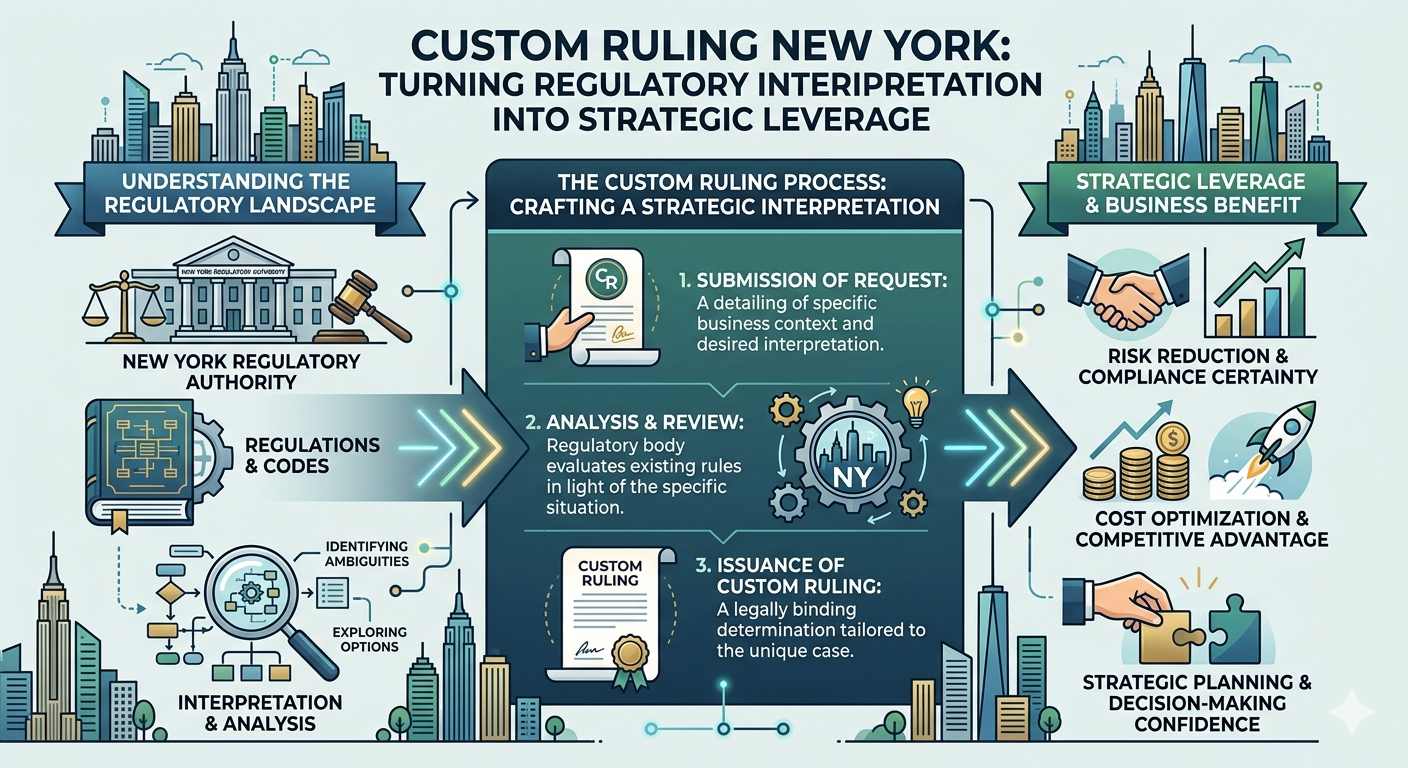
Custom Ruling New York: Turning Regulatory Interpretation into Strategic Leverage
In global trade, uncertainty is often more expensive than duty. A single misinterpretation of classification, valuation, or origin can disrupt supply chains, inflate landed costs, and trigger post entry audits. That is why custom ruling New York is not just a procedural request. It is a strategic instrument for importers who operate in technically complex product categories.
At American Trade Bridge, we approach binding rulings as a form of regulatory engineering. When used correctly, they do more than clarify tariff treatment. They create operational certainty that strengthens forecasting, compliance, and competitive positioning.
Why New York Rulings Matter in Technical Product Categories
The National Commodity Specialist Division in New York, operating under U.S. Customs and Border Protection, is responsible for issuing binding rulings on tariff classification and certain related issues. These rulings interpret the Harmonized Tariff Schedule in the context of specific product facts presented by the importer.
For highly engineered goods, composite materials, multifunctional devices, and emerging technologies, classification is rarely straightforward. A product may fall between headings, contain mixed materials, or perform dual functions. In such scenarios, relying solely on broker experience or prior entries can introduce long term compliance exposure.
A binding ruling provides a written determination that is legally binding on Customs for the requesting party, provided the facts remain consistent. This level of certainty becomes especially valuable when:
• Product design includes proprietary components
• Marketing descriptions differ from engineering specifications
• Competing importers classify similar goods differently
• Prior entries were made under provisional assumptions
Beyond Classification: Strategic Use Cases
Most discussions about custom ruling New York focus on tariff rates. That is a limited view. In practice, we leverage rulings for broader objectives.
1. Pre Launch Risk Mitigation
When introducing a new product line into the United States, regulatory ambiguity can distort pricing models. A binding ruling allows us to validate duty assumptions before large scale procurement or distribution contracts are finalized. This protects margin integrity and investor projections.
2. Audit Defense Architecture
In a post entry audit, consistency is critical. A binding ruling serves as documentary evidence of reasonable care. If the importer has followed the ruling precisely, enforcement risk is significantly reduced. This transforms the ruling from a compliance document into a defensive asset.
3. Supply Chain Structuring
Classification outcomes can influence sourcing strategies. For example, if a product’s essential character is derived from a specific component, that insight may affect how and where the product is assembled. A ruling clarifies how Customs evaluates the merchandise, enabling more informed global sourcing decisions.
The Technical Depth Required
Preparing a ruling request is not a clerical exercise. It demands:
• Detailed product descriptions supported by schematics
• Material composition breakdowns
• Functional analysis
• Manufacturing process narratives
• Samples or high resolution imagery
Incomplete or overly commercial descriptions often lead to unfavorable or overly narrow determinations. We focus on aligning technical documentation with tariff logic under the General Rules of Interpretation. The objective is not simply to obtain a ruling, but to obtain a defensible and commercially viable one.
Managing Consistency Across Ports

Although rulings issued in New York apply nationwide, importers frequently operate across multiple ports of entry. Ensuring that brokers, internal compliance teams, and logistics providers uniformly apply the ruling is essential.
We implement internal control protocols that include:
• Entry summary cross checks
• Broker instruction letters referencing the ruling number
• Periodic transaction audits
• Change management procedures if product specifications evolve
This systems based approach prevents the common error of securing a ruling but failing to operationalize it effectively.
When a Ruling Is Not Optional
There are situations where requesting a custom ruling New York is not merely beneficial but prudent:
• When classification affects eligibility for trade preference programs
• When duty differentials materially impact profitability
• When prior CBP inquiries suggest uncertainty
• When intellectual property or brand positioning depends on specific product identity
In these contexts, ambiguity carries quantifiable financial risk.
A Forward Looking Compliance Strategy
Trade compliance is increasingly data driven. Automated targeting systems, advanced analytics, and cross border information sharing have elevated enforcement standards. Importers who rely on informal interpretations expose themselves to retrospective duty bills and penalties.
At American Trade Bridge, we view binding rulings as part of a larger compliance architecture. They integrate with valuation reviews, country of origin analysis, and internal audit frameworks. The result is a structured, defensible import program designed to withstand scrutiny.
Custom ruling New York is not about paperwork. It is about converting regulatory interpretation into a predictable commercial advantage. When approached with technical precision and strategic intent, it becomes a foundational element of sustainable international trade operations.
