Leveraging Bonded Facilities for Strategic Duty Engineering
Customs Bonded New York
In global trade, timing, compliance, and capital efficiency determine whether a supply chain operates as a cost center or a competitive advantage. When importing through New York, one of the most powerful but underutilized tools is the customs bonded framework administered by U.S. Customs and Border Protection. At American Trade Bridge, we help importers use customs bonded New York facilities not just for storage, but as a structured strategy for duty engineering and inventory optimization.
Beyond Storage: Bonded Facilities as Financial Instruments
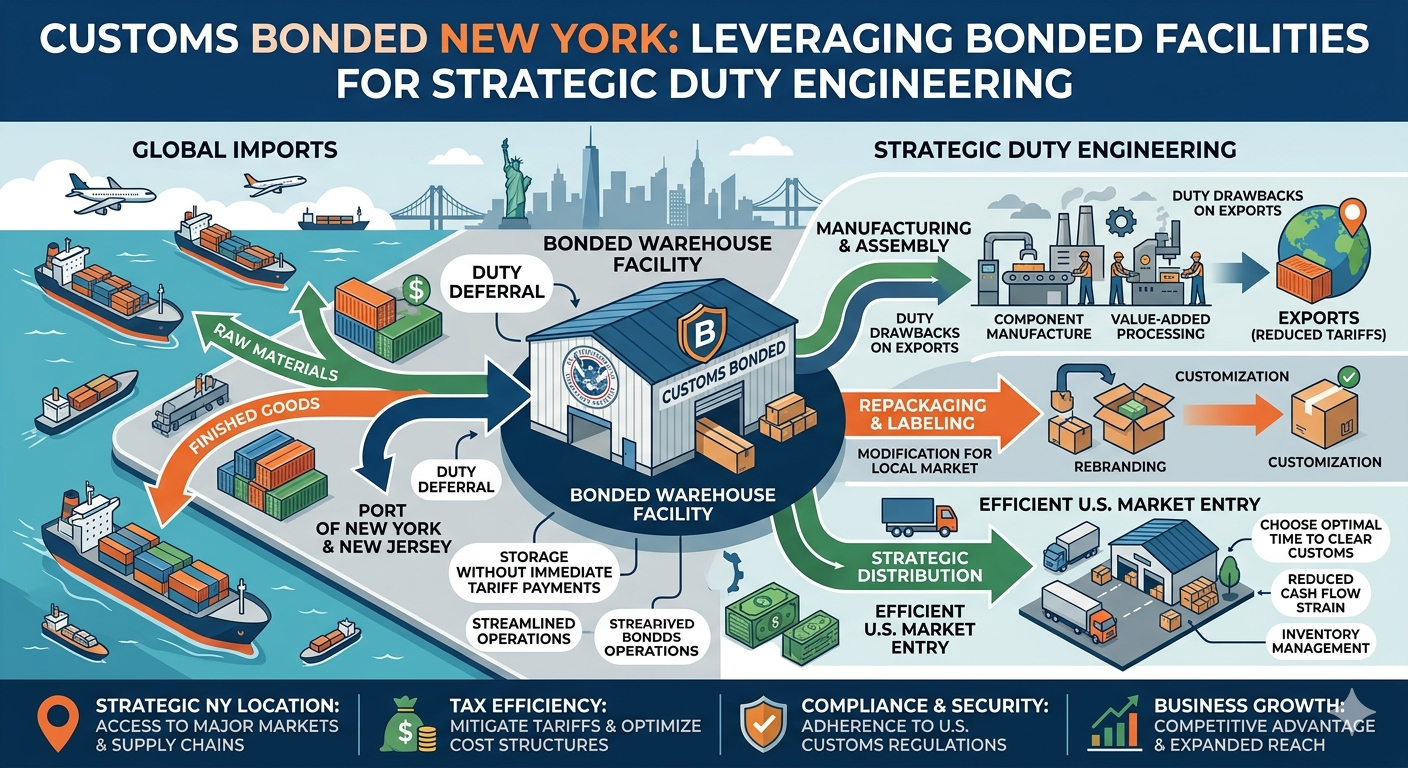
A bonded warehouse is not simply a secured storage site. It is a federally regulated environment where imported goods can be stored without immediate payment of duties and taxes. Under CBP supervision, merchandise may remain in bond for up to five years. During that period, duties are deferred until the goods enter U.S. commerce, or eliminated entirely if the goods are re exported.
For importers managing high value inventory, this creates a liquidity advantage. Instead of tying up working capital in duties upon arrival at the Port of New York and New Jersey, we structure bonded programs that align duty payments with actual sales cycles. This converts duty from a fixed upfront expense into a controllable operational variable.
Strategic Duty Engineering in a Bonded Environment
Duty engineering is a technical discipline involving tariff classification, valuation strategy, and trade program optimization. When properly implemented inside a bonded facility, it becomes significantly more powerful.
Within a bonded warehouse in New York, importers can:
• Repackage goods before domestic entry
• Relabel products to meet regulatory standards
• Assemble or manipulate merchandise under approved conditions
• Segregate goods destined for re export
This flexibility allows us to evaluate Harmonized Tariff Schedule classifications before final entry. If products are reconfigured or bundled differently for various markets, duty exposure may change. Conducting this process under bond prevents premature duty assessment while compliance decisions are finalized.
Re Export Arbitrage and International Redistribution
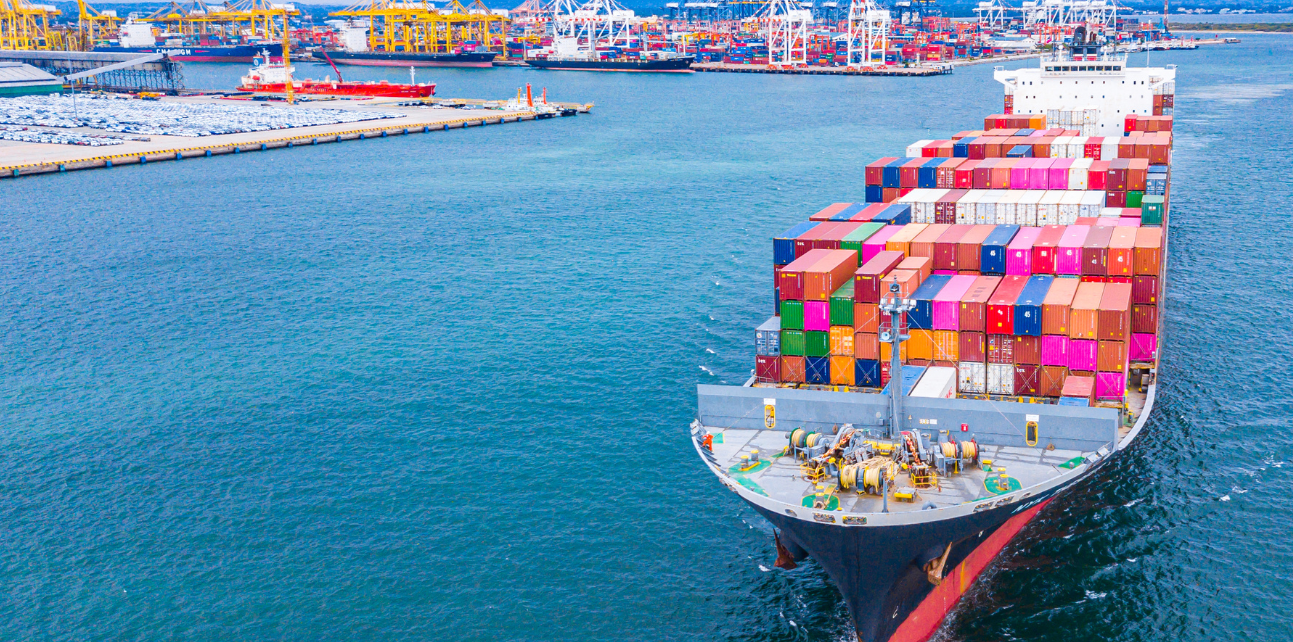
New York is a primary gateway for transatlantic and global commerce. Many importers route goods through the region not for U.S. consumption, but for redistribution to Canada, Latin America, or Europe. In these cases, bonded warehousing eliminates unnecessary duty outlay on goods that will never enter U.S. commerce.
We design bonded workflows that integrate directly with ocean freight, air cargo, and inland transport. By maintaining goods in bond status until final destination is confirmed, our clients avoid double duty scenarios and reduce exposure to regulatory missteps.
Risk Mitigation Through Compliance Control
Customs bonded operations are highly regulated. Inventory must be tracked with precision, records must be maintained in accordance with federal standards, and withdrawals must be properly documented. Non compliance can result in penalties, bond claims, or seizure.
Our team manages documentation, reconciliation, and audit readiness within the bonded structure. We implement internal control protocols that align with CBP expectations, ensuring that inventory movements, manipulation activities, and duty payments are defensible under examination.
This is especially critical for industries such as electronics, luxury goods, and industrial machinery, where valuation discrepancies can create significant financial exposure.
Bonded vs. Foreign Trade Zones: A Tactical Decision
Many importers compare bonded warehouses with Foreign Trade Zones. While both defer duty, bonded facilities often provide greater procedural simplicity for specific trade models, particularly when goods will either be re exported or quickly distributed into domestic channels.
In high velocity New York logistics environments, bonded facilities can offer faster operational deployment with fewer structural requirements than zone activation. We evaluate shipment volume, product classification complexity, and re export ratios before recommending the appropriate framework.
Customs Bonded New York as a Competitive Lever
When structured correctly, customs bonded New York operations are not a reactive compliance measure. They are a proactive trade finance tool. By synchronizing duty payment with revenue realization, optimizing classification strategies, and reducing exposure on re exports, importers gain measurable margin control.
At American Trade Bridge, we approach bonded logistics as part of an integrated trade architecture. Our objective is not simply to move goods through New York, but to engineer supply chains that are capital efficient, compliant, and strategically aligned with global expansion.
For importers seeking precision in duty management and regulatory execution, bonded infrastructure in New York offers far more than storage space. It offers leverage.
