How FMC OTI Licensing Fits Into the Larger Compliance Structure of an NVOCC
Understanding the Role of FMC OTI Licensing
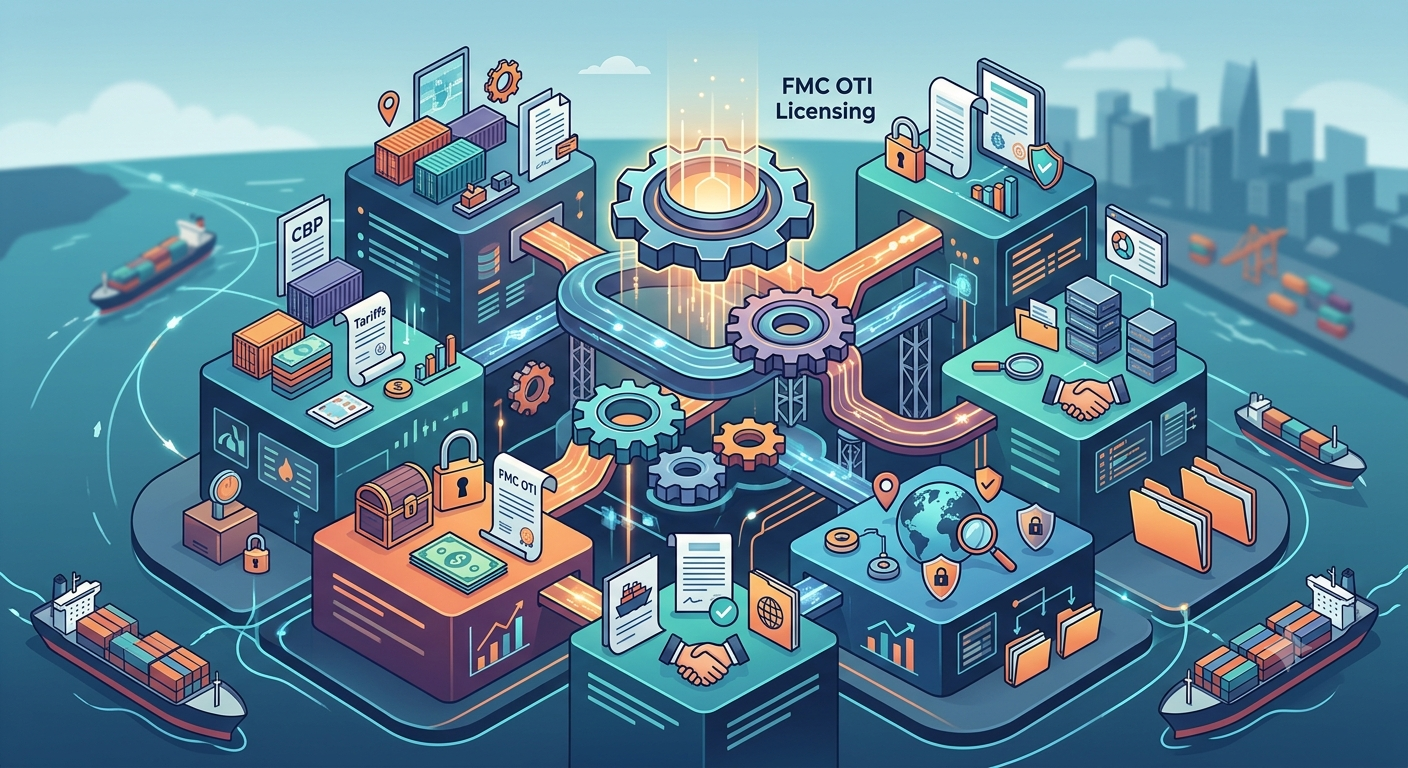
Operating as a Non-Vessel-Operating Common Carrier involves much more than arranging ocean transportation between shippers and vessel operators. An NVOCC operates within a regulatory framework that governs how it conducts business, represents its transportation services, maintains financial responsibility, and interacts with ocean common carriers. In the United States, the Federal Maritime Commission plays a central role in establishing and overseeing requirements applicable to Ocean Transportation Intermediaries. For U.S.-based NVOCCs, obtaining an FMC license is a fundamental component of lawful operation, while certain foreign-based NVOCCs may use registration or choose licensing depending on their circumstances. The FMC states that U.S.-based NVOCCs are required to obtain an OTI license, while non-U.S.-based NVOCCs may obtain a registration or license under applicable requirements. Understanding this distinction is important because licensing is not an isolated administrative step, but one part of a broader compliance structure that affects daily commercial and operational activities.
Why Licensing Is Only One Part of Compliance
An NVOCC can think of its FMC OTI license as the regulatory foundation upon which several other compliance responsibilities are built. Licensing establishes the company's authorization to perform regulated OTI activities, but maintaining that authorization requires continuing attention to financial responsibility, business information, tariffs, documentation, and regulatory reporting. The FMC reviews OTI applications and issues licenses after applicants satisfy applicable requirements and provide acceptable proof of financial responsibility. This means an NVOCC cannot treat its license as a permanent approval that eliminates the need for ongoing compliance management. Changes to corporate information, qualifying individuals, business structures, trade names, or operating authority can create additional filing or notification obligations. A strong compliance program therefore connects the FMC license with the operational controls that govern how the NVOCC conducts business every day.
The Regulatory Foundation for an NVOCC
The regulatory structure applicable to NVOCCs is principally established through the Shipping Act and the FMC regulations in 46 CFR Part 515. The FMC specifically explains that licensing, registration, and financial responsibility requirements for NVOCCs are different from those applicable to vessel-operating common carriers. This distinction matters because an NVOCC assumes common carrier responsibilities without operating the vessels that physically transport the cargo. Our compliance approach therefore needs to account for both the commercial responsibilities associated with offering transportation and the regulatory obligations imposed on an OTI. The legal framework also affects how we structure relationships with shippers, ocean carriers, agents, and other logistics participants. Compliance becomes more effective when these requirements are incorporated into operational processes instead of being handled only when a regulatory filing becomes due.
Qualifying Individuals and Organizational Responsibility
A key component of the licensing structure is the qualifying individual requirement for U.S.-based NVOCC applicants. The FMC requires a qualifying individual to have at least three years of demonstrable OTI experience and to hold an appropriate position within the applicant's organizational structure. This requirement connects the legal authorization of the business with demonstrated industry knowledge and operational experience. It also illustrates why compliance responsibility should not be delegated entirely to an outside service provider without appropriate internal oversight. Our organization needs to maintain clear ownership of regulatory information and understand who is responsible for keeping licensing records accurate. When the qualifying individual changes, the NVOCC must also recognize that the change can affect its FMC records and require appropriate action.
Financial Responsibility and the OTI Bond
Financial responsibility is another major layer of the NVOCC compliance structure. The FMC requires licensed U.S.-based NVOCCs to provide proof of financial responsibility, generally through a surety bond, in the amount of $75,000. The bond requirement provides an important financial protection mechanism within the regulatory framework and demonstrates that licensing involves more than submitting an application. The surety must meet FMC requirements, and the financial responsibility instrument must remain active for the license to remain in good standing. The FMC notes that a licensed OTI cannot maintain its license without active acceptable proof of financial responsibility. We therefore treat bond administration as an ongoing compliance responsibility rather than a one-time licensing formality.
Why Bond Continuity Matters
A lapse in financial responsibility can create consequences that extend well beyond paperwork. According to the FMC, when an OTI bond is cancelled, the license may be revoked after the applicable notice period if acceptable financial responsibility is not maintained. For an NVOCC, that possibility can affect the ability to continue performing regulated OTI services in U.S. trades. The practical implication is that bond renewal, amendments, riders, and cancellation notices should be incorporated into a formal compliance calendar. We also need to ensure that corporate changes or branch changes are communicated appropriately so that the financial responsibility documentation remains consistent with the company's regulatory records. A compliance structure that monitors the bond independently from the license application can help reduce the risk of an administrative issue becoming an operational disruption.
Tariffs and Commercial Compliance
FMC OTI licensing also connects directly with tariff and commercial requirements. An NVOCC does not simply receive a license and then operate without additional regulatory responsibilities. Its transportation offering, rates, terms, and applicable tariff framework must be managed in accordance with the requirements governing NVOCC operations. The FMC has emphasized that common carriers must verify an NVOCC's compliance with licensing or registration, tariffs, and financial responsibility before doing business with that NVOCC. This demonstrates that tariff compliance is not an isolated back-office issue because it can influence whether vessel-operating common carriers are willing or able to conduct business with an NVOCC. We therefore view tariff administration as an integral part of the broader compliance architecture surrounding our OTI status.
Form FMC-1 and Operational Transparency
Another important element of the regulatory framework involves the information an NVOCC provides to the FMC about its operations. The FMC maintains records of active NVOCCs and other OTIs, allowing industry participants to verify regulatory status. The information associated with an NVOCC must remain consistent with the company's actual business structure and regulatory authority. This makes accuracy in regulatory filings particularly important when an NVOCC changes its name, trade names, organizational structure, or other material business information. We need to ensure that internal corporate records, FMC records, contractual documents, and operational systems tell the same story. Consistency across these records strengthens compliance and reduces the possibility of discrepancies being identified during regulatory review or commercial due diligence.
Managing Changes to the Business
NVOCC compliance becomes especially important when a company grows or changes its structure. The FMC requires licensed or registered NVOCCs and ocean freight forwarders to report changes to information provided in their most recent application within 30 days. This can become relevant when there is a change in a qualifying individual, company name, trade name, business structure, or OTI authority. Expansion can also introduce new branch offices, additional operational functions, or changes in how services are marketed and contracted. We therefore need a change-management process that identifies regulatory implications before corporate or operational changes are implemented. Treating regulatory reporting as part of business-change governance helps prevent an otherwise routine corporate update from creating an avoidable compliance gap.
Foreign-Based NVOCCs and Different Compliance Paths
The FMC framework also recognizes that foreign-based NVOCCs may operate under different regulatory pathways. A non-U.S.-based NVOCC can generally choose between obtaining an FMC license under the applicable requirements or operating as a registered NVOCC when the relevant conditions are satisfied. A foreign-based NVOCC seeking an FMC license must establish a qualifying presence in the United States and satisfy additional requirements, including appointing an appropriately qualified individual. An unlicensed foreign-based NVOCC, by contrast, is subject to a different financial responsibility requirement, with the FMC identifying $150,000 as the applicable amount. Understanding which regulatory pathway applies is essential because the choice affects documentation, financial responsibility, registration, and operational compliance.
Documentation as a Compliance Control
Documentation sits at the center of effective NVOCC compliance because regulatory requirements must ultimately be demonstrated through accurate records. Licensing information, bond documentation, tariffs, shipping documents, contracts, corporate records, and communications with regulatory authorities should be maintained in a controlled environment. The FMC regulations also address the use of an OTI's name and license or registration number in connection with its business activities. This means documentation is not merely an administrative recordkeeping function, but part of demonstrating that the NVOCC is operating under the authority granted to it. We can reduce compliance risk by establishing consistent procedures for reviewing regulatory identifiers before they appear on operational and commercial documents. Proper document controls also make it easier to respond to carrier verification requests, regulatory inquiries, audits, and internal compliance reviews.
Carrier Relationships and Compliance Verification
The relationship between an NVOCC and vessel-operating common carriers creates another important compliance connection. Ocean carriers have their own regulatory obligations when dealing with NVOCCs, and the FMC has reminded common carriers that they must verify applicable NVOCC compliance before accepting or transporting cargo for an NVOCC. This means an NVOCC's compliance status can directly influence commercial relationships with carrier partners. An active license, appropriate financial responsibility, and compliant tariff arrangements can therefore support operational credibility as well as regulatory standing. We understand that carrier relationships depend on more than rates and sailing schedules because regulatory status can form part of the carrier's onboarding and verification process. Maintaining accurate FMC information can consequently become a practical commercial advantage.
Building an Internal Compliance Framework
A mature NVOCC compliance program should connect regulatory requirements with internal responsibilities. Instead of treating the FMC license as a document held by one department, we can integrate licensing information into finance, operations, legal, sales, documentation, and management processes. Finance teams can monitor bond status and renewal requirements, while operations teams can verify that regulated services are conducted under the appropriate authority. Documentation teams can monitor regulatory identifiers and tariff-related materials, while management can review changes that may trigger FMC reporting obligations. This cross-functional approach creates multiple points of control around the same regulatory requirements. The objective is not simply to remain licensed, but to create an organizational system that continuously supports compliant NVOCC operations.
License Renewals and Long-Term Compliance
Maintaining an OTI license requires attention to renewal requirements as well as the original application. The FMC states that OTI licenses are subject to renewal, with subsequent renewals generally occurring every three years after the initial renewal period. Renewal notices are sent electronically, which makes maintaining current contact information with the Commission particularly important. We should therefore track renewal dates independently rather than relying exclusively on an incoming notice from the regulator. A structured compliance calendar can include license renewal, bond status reviews, corporate information checks, tariff reviews, and verification of qualifying-individual information. Long-term compliance becomes substantially more reliable when these activities are scheduled and documented before deadlines become urgent.
Connecting Licensing With Daily Operations
The strongest compliance structure is one in which regulatory requirements are reflected in everyday operating procedures. When a new customer is onboarded, when a carrier relationship is established, when a tariff is updated, or when a corporate change occurs, the relevant compliance implications should be considered as part of the workflow. This approach prevents the licensing function from becoming disconnected from the people actually conducting transportation transactions. We can establish approval controls that require compliance review when a transaction or business decision could affect FMC obligations. These controls can be supported by documented procedures, designated responsibilities, training, and periodic internal reviews. By integrating regulatory requirements into daily processes, we can make compliance more consistent and less dependent on individual memory.
The Business Value of a Strong Compliance Structure
FMC OTI licensing is ultimately more than a regulatory credential because it forms part of the infrastructure that supports an NVOCC's ability to operate credibly in the U.S. ocean transportation market. A well-managed compliance structure can help demonstrate reliability to carriers, customers, financial partners, and other stakeholders. It can also reduce the likelihood that administrative issues involving licensing, financial responsibility, tariffs, or corporate information will interfere with commercial operations. Our objective is to maintain a system where regulatory obligations are identified, assigned, monitored, documented, and reviewed as part of normal business management. This approach is particularly valuable as an NVOCC expands its customer base, carrier relationships, trade lanes, and organizational footprint. Strong compliance can therefore support both regulatory continuity and sustainable commercial growth.
How We Approach NVOCC Compliance
At American Trade Bridge, we recognize that successful NVOCC operations require a coordinated approach to regulatory compliance rather than reliance on a single license or filing. We consider FMC OTI licensing, financial responsibility, tariff obligations, corporate reporting, documentation, and carrier requirements as interconnected elements of the same compliance framework. Our approach focuses on keeping regulatory information accurate while aligning compliance processes with the practical realities of international ocean transportation. We also understand that compliance requirements can evolve and that individual operating structures may create different obligations, particularly for foreign-based NVOCCs. For that reason, we emphasize disciplined recordkeeping, timely regulatory action, and ongoing review of operational practices. American Trade Bridge uses this broader perspective to help ensure that compliance remains an active part of responsible NVOCC management rather than a one-time administrative exercise.
Final Perspective on FMC OTI Licensing
FMC OTI licensing is one of the most visible components of an NVOCC's regulatory framework, but it should never be viewed in isolation. The license connects with financial responsibility, tariff administration, reporting obligations, documentation standards, carrier relationships, and the company's broader operating controls. The FMC's current guidance confirms that NVOCC compliance involves multiple interconnected requirements covering licensing or registration, financial responsibility, and related regulatory obligations. When these requirements are managed together, an NVOCC can establish a stronger foundation for reliable and compliant ocean transportation services. We believe the most effective compliance programs are proactive, documented, and integrated into everyday decision-making. Understanding how each requirement fits into the larger structure allows an NVOCC to protect its regulatory standing while building a more dependable foundation for long-term international trade operations.
