Businesses Need Tariff Classification Services NYC
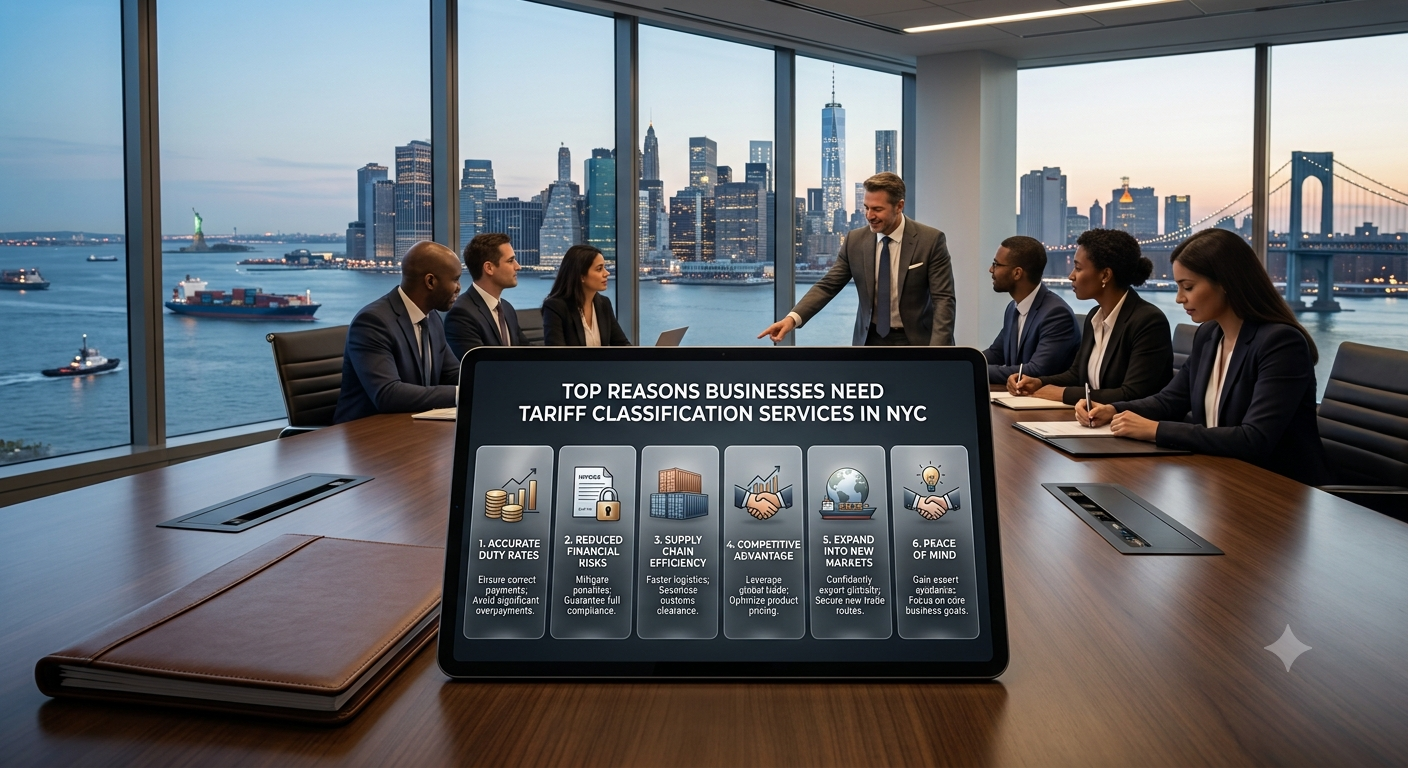
Top Reasons Businesses Need Tariff Classification Services in NYC
International trade has become more complex than ever. Businesses importing goods into the United States face increasing pressure to maintain compliance, avoid delays, and manage costs effectively. In a global trade hub like New York City, where imports move rapidly through ports, warehouses, and distribution centers, tariff classification plays a critical role in successful operations. Even a small error in product classification can lead to penalties, shipment holds, overpayment of duties, or customs audits.
For companies involved in importing goods, tariff classification services are no longer optional. They are an essential part of protecting profitability and maintaining compliance with customs regulations. At American Trade Bridge, we help businesses navigate the complexities of tariff codes, customs procedures, and trade compliance so they can focus on growth with confidence.
Understanding Tariff Classification
Tariff classification is the process of assigning the correct Harmonized Tariff Schedule code to imported products. Every imported item entering the United States must be classified according to the Harmonized System developed by the World Customs Organization. These codes determine the duties, taxes, import restrictions, and regulatory requirements associated with products.
The classification process may appear straightforward at first, but many products fall into gray areas where multiple interpretations are possible. A single product may contain several materials, serve multiple purposes, or include components that affect classification. Customs authorities examine these details carefully because classification directly impacts revenue collection and trade compliance.
Businesses that rely on assumptions or outdated information often expose themselves to unnecessary financial and legal risks.
NYC Is a Major Gateway for International Trade
New York City remains one of the busiest trade and logistics centers in the United States. Importers moving cargo through the Port of New York and New Jersey deal with high shipment volumes, strict customs enforcement, and fast-paced supply chain expectations. Customs officials closely monitor imported goods to ensure compliance with federal regulations.
In such a competitive market, delays caused by incorrect tariff classifications can significantly disrupt operations. Goods may be held for inspection, subjected to additional documentation requests, or assessed unexpected duties. Businesses that operate on tight margins or rapid delivery schedules cannot afford these interruptions.
Professional tariff classification services help companies avoid costly mistakes while ensuring smoother customs clearance.
Reducing the Risk of Customs Penalties
One of the biggest reasons businesses seek tariff classification services is to reduce the risk of penalties from U.S. Customs and Border Protection. Incorrect classifications can trigger audits, fines, and retroactive duty assessments. In some cases, companies may be accused of negligence or misrepresentation if customs authorities determine the errors were avoidable.
Import regulations continue to evolve due to trade agreements, geopolitical developments, and changes in tariff policies. Businesses that fail to keep up with these updates may unknowingly use outdated classifications.
Experienced classification specialists analyze products carefully, review technical specifications, and apply the correct tariff codes based on current regulations. This level of accuracy helps businesses maintain compliance and minimize exposure to enforcement actions.
Avoiding Overpayment of Duties
Many businesses assume customs issues only arise when duties are underpaid. In reality, overpaying duties is also a common problem. Incorrect classifications can place products into categories with higher duty rates than necessary.
For companies importing large volumes of goods, even small classification errors can result in substantial financial losses over time. Businesses may spend years paying unnecessary tariffs without realizing more favorable classifications exist.
Professional tariff classification services help identify opportunities for legitimate duty savings while ensuring full compliance with customs laws. This creates a more efficient import strategy and improves overall profitability.
Managing Complex Products and Industries
Modern products are increasingly sophisticated. Electronics, machinery, medical devices, textiles, automotive parts, and consumer goods often contain multiple components and materials that complicate classification decisions.
Certain industries also face additional regulatory scrutiny. Products may require compliance with agencies such as the FDA, FCC, USDA, or EPA depending on their nature. Tariff classifications can influence how these agencies evaluate imported goods.
Businesses operating in specialized sectors benefit from expert guidance because accurate classification requires both technical understanding and deep knowledge of customs regulations. At American Trade Bridge, we work closely with importers to evaluate complex products thoroughly and determine the most appropriate classifications for their shipments.
Supporting Customs Audits and Compliance Reviews
Customs audits are becoming more common as authorities increase enforcement efforts. During an audit, businesses must demonstrate that their classifications were determined correctly and supported by adequate documentation.
Without proper records and classification analysis, companies may struggle to defend their import practices. This can lead to financial liabilities and reputational damage.
Tariff classification services provide businesses with documented classification methodologies, product reviews, and compliance support that strengthen their position during audits. Having professional guidance available can make a significant difference when responding to customs inquiries.
Improving Supply Chain Efficiency
Accurate tariff classification contributes directly to smoother logistics operations. When products are classified correctly from the start, customs clearance tends to move more efficiently. This reduces the likelihood of shipment delays, inspections, and documentation disputes.
For businesses that rely on predictable delivery timelines, supply chain efficiency is essential. Delays at ports can affect inventory management, customer satisfaction, and revenue generation.
Companies operating in NYC’s fast-moving trade environment benefit from proactive classification strategies that keep goods moving through customs with fewer complications.
Staying Competitive in Global Trade
Global trade competition continues to intensify. Businesses must manage costs carefully while maintaining compliance across international supply chains. Companies that overlook tariff classification often face unnecessary expenses that reduce their competitive advantage.
Strategic classification planning allows businesses to make informed decisions about sourcing, pricing, and import operations. It also supports better forecasting of landed costs, which is critical for budgeting and profitability analysis.
Working with knowledgeable trade compliance professionals gives businesses access to insights that improve operational efficiency and reduce uncertainty.
Navigating Trade Policy Changes
Trade policies can change rapidly due to international disputes, new trade agreements, and government regulations. Tariff rates on certain products may increase or decrease depending on evolving economic and political conditions.
Businesses importing goods into the United States must stay informed about these changes because even minor policy adjustments can impact supply chain costs significantly.
Tariff classification experts monitor regulatory developments and help businesses adapt their import strategies accordingly. This proactive approach allows companies to respond quickly to changes while maintaining compliance.
The Value of Professional Expertise
Tariff classification requires more than simply searching for a code in a database. It involves interpreting customs regulations, understanding product specifications, reviewing legal rulings, and applying technical knowledge accurately.
Many businesses do not have the internal resources necessary to manage classification challenges effectively. Outsourcing this responsibility to experienced professionals provides peace of mind and reduces operational risk.
At American Trade Bridge, we assist businesses with detailed classification analysis, compliance support, and strategic trade guidance tailored to their industries and import requirements. Our goal is to help importers navigate customs regulations confidently while improving efficiency across their supply chains.
Tariff classification is one of the most important aspects of international trade compliance. In a major import hub like New York City, businesses face increasing pressure to ensure accuracy, minimize costs, and avoid customs disruptions. Incorrect classifications can lead to penalties, shipment delays, overpayment of duties, and compliance challenges that negatively affect operations.
Professional tariff classification services provide businesses with the expertise needed to navigate complex customs regulations successfully. From reducing financial risk to improving supply chain efficiency, accurate classification plays a vital role in long-term trade success.
As global commerce continues to evolve, businesses that invest in proper tariff classification strategies position themselves for stronger compliance, greater efficiency, and sustainable growth. Through reliable support and industry expertise, American Trade Bridge helps importers move forward with confidence in an increasingly complex trade environment.
