Customs Bonded Logistics in New York: Designing a Zero Friction Trade Corridor for High Velocity Imports
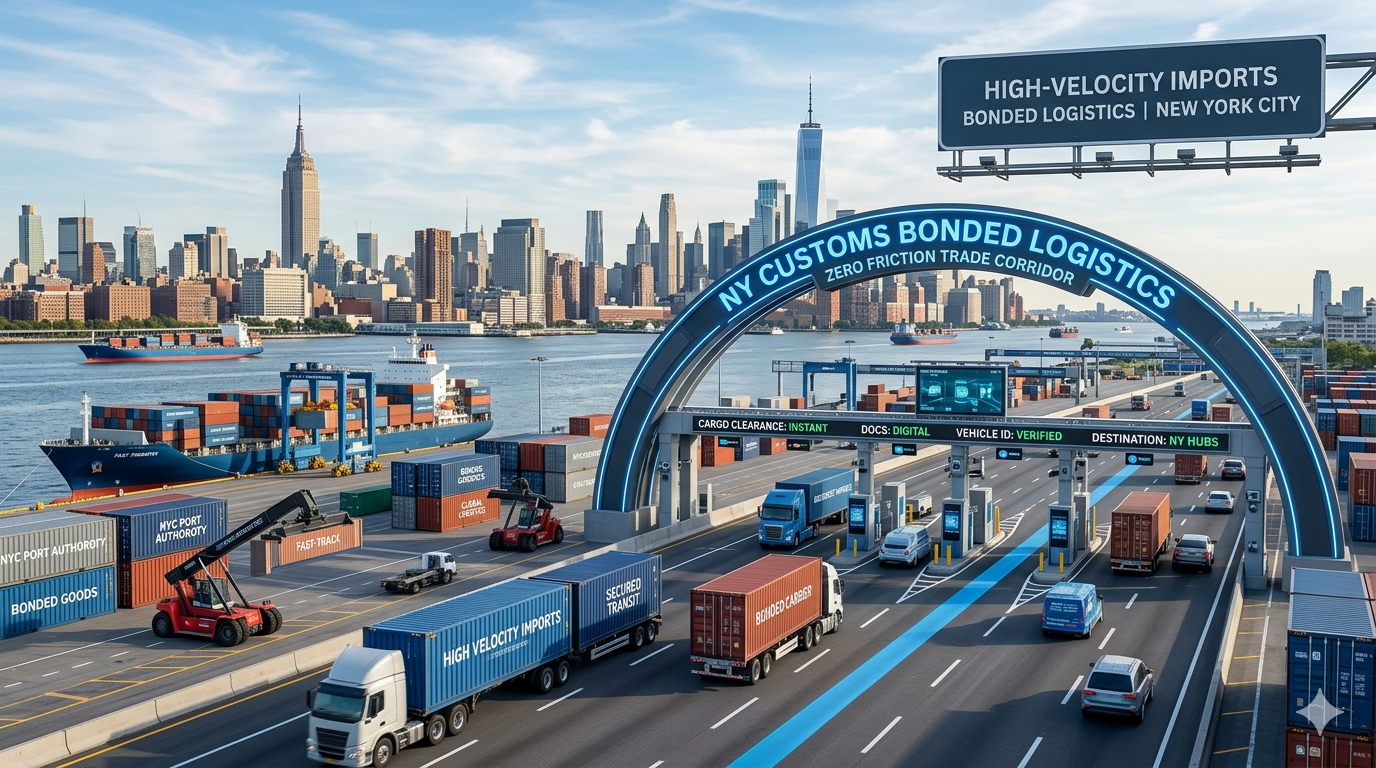
Customs Bonded Logistics in New York
In a global trade environment where speed, compliance, and capital efficiency must operate together, customs bonded logistics has evolved into more than a regulatory necessity. It is now a strategic infrastructure layer. At American Trade Bridge, we approach customs bonded operations in New York not as a storage solution, but as a precision engineered trade corridor that reduces friction across the entire import lifecycle.
New York remains one of the most complex and opportunity rich entry points into the United States. With proximity to major ports, dense consumer markets, and advanced distribution networks, the region demands a more intelligent bonded strategy. We design our bonded workflows to align with both regulatory frameworks and real time supply chain demands, particularly those governed by U.S. Customs and Border Protection.
Reframing Bonded Warehousing as a Financial Instrument
Traditional thinking treats bonded warehouses as passive holding areas where duties are deferred. We challenge that assumption. A properly structured bonded operation functions as a financial instrument that improves cash flow, reduces landed cost volatility, and enhances inventory liquidity.
When goods enter a bonded facility, duty payments are postponed until goods are formally released into domestic commerce. This creates a time based arbitrage opportunity. We leverage this window to align duty payment schedules with actual sales velocity rather than arrival dates. For importers dealing with seasonal demand or fluctuating pricing models, this approach provides measurable financial advantages.
The Micro Segmentation Model for Bonded Inventory
One of the most overlooked inefficiencies in bonded logistics is inventory homogenization. Many operators treat bonded goods as a single category, which creates bottlenecks during inspection, release, and documentation.
At American Trade Bridge, we deploy a micro segmentation model. Goods are categorized not only by SKU but also by regulatory profile, duty structure, country of origin, and compliance risk level. This allows us to:
• Accelerate selective releases without disrupting entire shipments
• Reduce inspection delays by isolating high risk categories
• Optimize documentation workflows for each segment
• Improve traceability for audits and compliance checks
This granular approach transforms bonded storage into a dynamic system rather than a static warehouse.
Synchronizing Bonded Operations with Port Dynamics
New York’s trade ecosystem is deeply connected to major maritime gateways such as the Port of New York and New Jersey. Congestion, vessel schedules, and port clearance times directly influence bonded workflows.
We integrate port intelligence into our bonded operations. This includes predictive scheduling based on vessel arrivals, customs clearance patterns, and inland transportation availability. By synchronizing bonded intake with port dynamics, we reduce dwell time and eliminate unnecessary handling.
The result is a continuous flow model where goods move seamlessly from port to bonded storage to final distribution without idle stages.
Compliance Engineering Instead of Compliance Reaction
Compliance is often treated as a reactive function. Documents are prepared after goods arrive, and issues are resolved under time pressure. This approach increases risk and cost.
We implement compliance engineering. Every shipment is pre structured to meet regulatory requirements before it reaches New York. This includes classification validation, documentation alignment, and duty calculation modeling.
By the time goods enter our bonded facility, they are already optimized for clearance. This proactive system minimizes intervention from authorities and ensures consistent alignment with U.S. Customs and Border Protection standards.
Bonded Logistics for Multi Channel Distribution
Modern importers rarely operate within a single distribution channel. Goods may be allocated across wholesale, retail, and e commerce simultaneously. Bonded logistics must support this complexity.
We design bonded environments that allow multi channel allocation before duty payment. Inventory can be staged, sorted, and assigned to different channels while still under bond. Duties are only applied when goods exit the bonded system for domestic use.
This enables:
• Faster order fulfillment across channels
• Reduced inventory duplication
• Better alignment between demand signals and duty payments
The Role of Data in Bonded Decision Making
Bonded logistics generates a significant amount of data, but most operators fail to convert it into actionable intelligence. We integrate data analytics directly into our bonded workflows.
Key metrics we monitor include:
• Time under bond versus sales velocity
• Duty exposure across product categories
• Clearance cycle times
• Inspection frequency and outcomes
This data driven approach allows us to continuously refine bonded strategies and identify opportunities for cost reduction and efficiency gains.
Risk Isolation Through Controlled Bonded Environments
Not all shipments carry the same level of compliance risk. Some products are more likely to be inspected or require additional documentation. Mixing these with low risk goods creates unnecessary delays.
We isolate risk within the bonded environment. High scrutiny goods are stored and processed separately, ensuring that routine shipments are not impacted by targeted inspections. This controlled environment reduces operational disruption and maintains consistent throughput.
Future Proofing Bonded Logistics in New York
Trade regulations, tariff structures, and global supply chain patterns continue to evolve. A static bonded strategy cannot keep pace with these changes.
At American Trade Bridge, we design bonded systems that are adaptable. Our infrastructure supports rapid reconfiguration based on new regulations, shifting trade routes, and emerging market demands. Whether it involves new tariff classifications or changes in import policy, our bonded framework is built to respond without operational downtime.
Customs bonded logistics in New York is no longer just about deferring duties. It is about building a high performance trade corridor that integrates finance, compliance, and distribution into a single system.
At American Trade Bridge, we use bonded operations as a strategic tool to eliminate friction, enhance visibility, and improve capital efficiency. By combining regulatory precision with operational innovation, we enable importers to move faster, spend smarter, and scale with confidence in one of the most demanding trade environments in the world.
