FMC Compliance Services NYC: Reframing Regulatory Alignment as a Competitive Trade Advantage
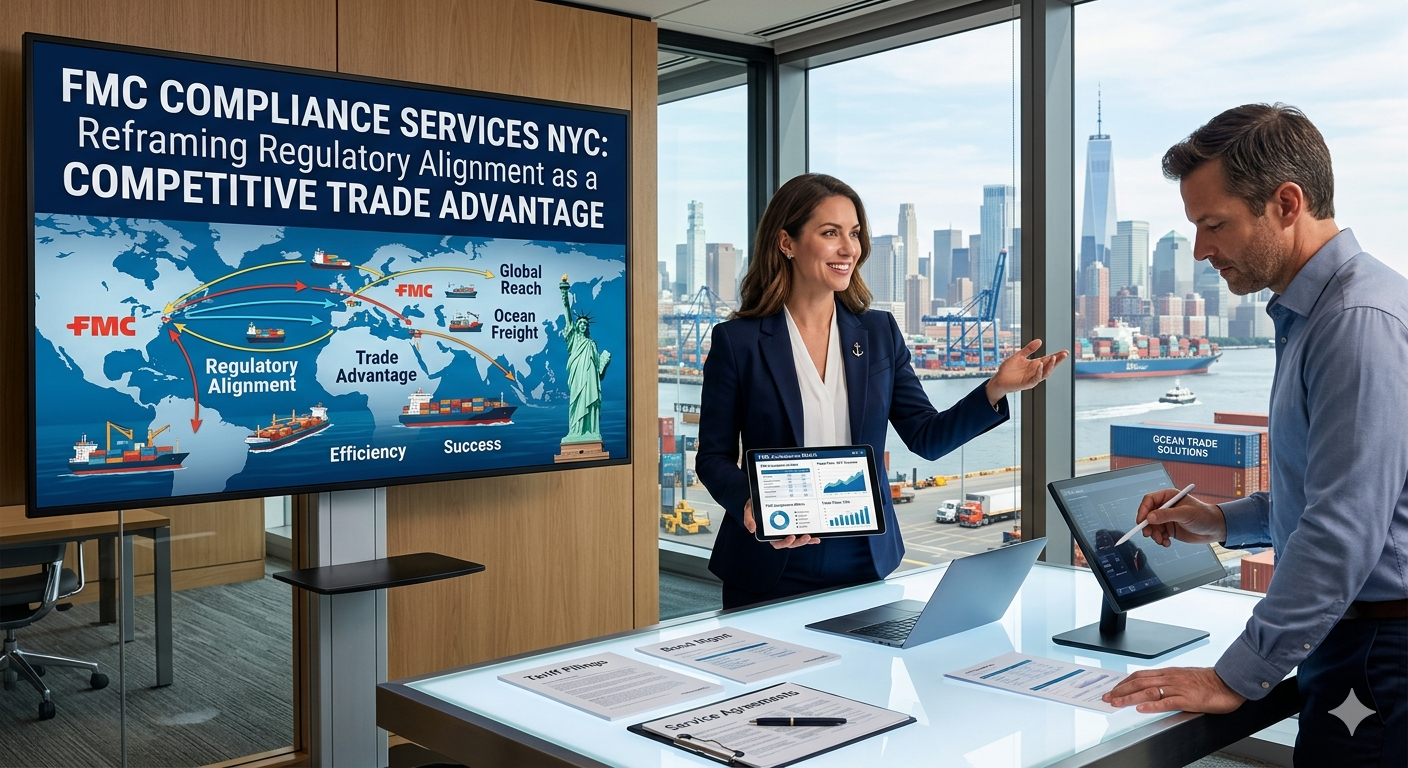
FMC Compliance Services NYC
In a city like New York, where global trade flows intersect with dense regulatory frameworks, compliance is often treated as a cost center. We see it differently. At American Trade Bridge, we position Federal Maritime Commission compliance not as an obligation, but as a strategic layer that can unlock operational resilience, reputational strength, and long term scalability. Our approach to FMC compliance services in NYC is built around transforming regulatory adherence into a measurable business asset.
The Hidden Complexity of FMC Compliance in NYC
New York’s shipping ecosystem is unlike any other. With high container volumes, diverse cargo categories, and multilayered stakeholder networks, compliance requirements extend far beyond documentation. Ocean Transportation Intermediaries, Non Vessel Operating Common Carriers, and freight forwarders must align with FMC standards while navigating port authority rules, customs interactions, and contractual obligations with carriers.
We frequently observe businesses underestimating the interconnected nature of compliance. A minor oversight in tariff publication or bonding requirements can cascade into shipment delays, financial penalties, or reputational setbacks. Our role is to map these interdependencies and eliminate friction points before they impact operations.
Moving Beyond Static Compliance Models
Traditional compliance models rely heavily on reactive processes. Businesses respond to regulatory changes after they occur, often scrambling to adjust systems and documentation. We reject this static model. Instead, we implement dynamic compliance frameworks that evolve alongside regulatory updates and market conditions.
Our methodology includes continuous monitoring of FMC regulations, proactive risk assessment, and adaptive policy design. By embedding compliance into operational workflows rather than treating it as a separate function, we ensure consistency and reduce the likelihood of violations.
Compliance as an Operational Intelligence Layer
One of the most overlooked aspects of FMC compliance is its potential to generate operational intelligence. Every compliance requirement, from tariff filings to service contracts, contains structured data that can be analyzed for insights.
We help businesses leverage this data to identify inefficiencies, optimize routing strategies, and improve cost forecasting. For example, analyzing tariff structures can reveal pricing inconsistencies or opportunities for competitive positioning. Compliance data becomes a decision making tool rather than a regulatory burden.
NYC Specific Challenges and Our Strategic Response
Operating in NYC introduces unique compliance challenges that require localized expertise. These include:
• High scrutiny from regulatory bodies due to trade volume
• Complex port logistics and congestion variables
• Diverse client portfolios with varying compliance needs
• Rapidly changing trade policies affecting import and export flows
We address these challenges through tailored compliance architectures. Our team designs frameworks that account for local nuances while maintaining alignment with federal standards. This dual focus ensures that businesses remain compliant without sacrificing agility.
Integrating Compliance with Digital Infrastructure
Modern trade operations rely heavily on digital platforms. However, many systems are not designed with compliance in mind. This creates gaps that can lead to errors or inefficiencies.
We integrate FMC compliance requirements directly into digital workflows. Whether it is automated tariff updates, compliance checkpoints in booking systems, or real time audit trails, our solutions ensure that compliance is embedded at every stage of the process. This reduces manual intervention and enhances accuracy.
Risk Mitigation Through Predictive Compliance
Compliance is often associated with risk avoidance, but we take it a step further by introducing predictive elements. By analyzing historical data, regulatory trends, and operational patterns, we anticipate potential compliance risks before they materialize.
This predictive approach allows businesses to take corrective actions in advance, minimizing disruptions and maintaining continuity. It also builds confidence among stakeholders, including clients and regulatory authorities.
Building a Culture of Compliance
Technology and frameworks are only part of the equation. Sustainable compliance requires a cultural shift within the organization. We work closely with teams to foster a compliance first mindset that aligns with business objectives.
This includes training programs, process standardization, and internal audits that reinforce accountability. When compliance becomes part of the organizational DNA, it transitions from a reactive function to a proactive discipline.
The Strategic Value of FMC Compliance in NYC
In a competitive market like NYC, differentiation is critical. Businesses that demonstrate strong compliance capabilities gain a significant advantage. They are more likely to secure partnerships, attract high value clients, and navigate regulatory changes with confidence.
We help our clients position compliance as a trust signal. By maintaining transparency, consistency, and accuracy in all regulatory interactions, they build credibility that translates into business growth.
Our Approach at American Trade Bridge
At American Trade Bridge, we combine regulatory expertise with operational insight. Our FMC compliance services in NYC are designed to align with the realities of modern trade while anticipating future challenges.
We do not offer one size fits all solutions. Instead, we develop customized compliance strategies that reflect each client’s business model, risk profile, and growth ambitions. Our focus is on creating systems that are not only compliant but also efficient, scalable, and strategically aligned.
FMC compliance in NYC is far more than a regulatory requirement. It is a complex, dynamic, and often underutilized component of global trade operations. By reframing compliance as a strategic asset, businesses can unlock new levels of efficiency, resilience, and competitive advantage.
We partner with our clients to transform compliance from a constraint into a catalyst. Through innovation, integration, and proactive strategy, we ensure that regulatory alignment becomes a driver of success rather than a barrier to growth.
