Freight Broker License Application Requirements for US Logistics Companies
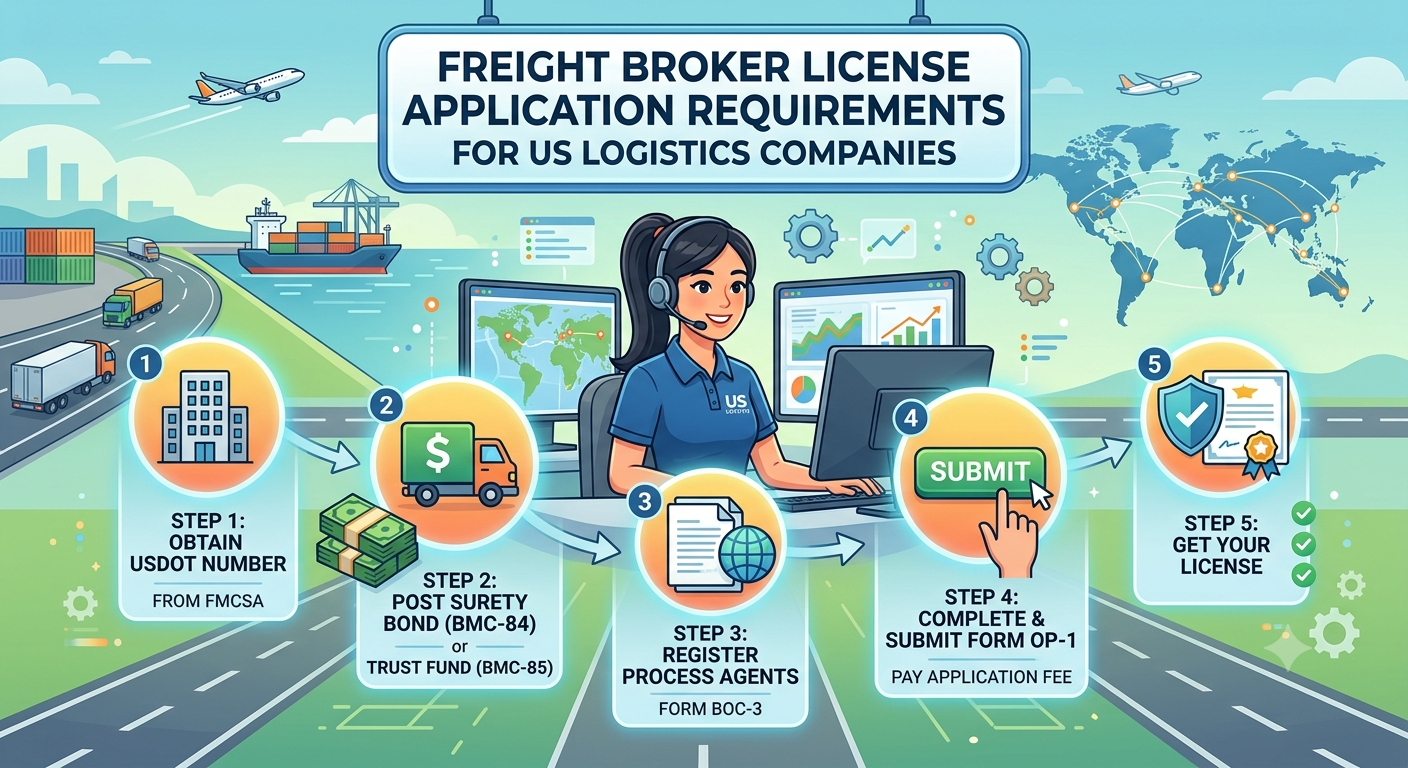
Freight Broker License Application Requirements for US Logistics Companies
The freight and logistics sector in the United States continues to expand as businesses rely on efficient transportation networks to move goods across domestic and international markets. As demand for shipping coordination grows, many logistics businesses are exploring opportunities in freight brokerage. Becoming a licensed freight broker allows companies to legally connect shippers with carriers while earning revenue through transportation management services.
For logistics companies planning to enter this field, understanding the licensing process is essential. The application requirements involve several federal regulations, financial obligations, and compliance standards that must be completed before operations begin. At American Trade Bridge, we help businesses understand the legal and operational framework required to establish compliant freight brokerage operations in the United States.
Understanding the Role of a Freight Broker
A freight broker acts as an intermediary between shippers and motor carriers. Instead of transporting cargo directly, brokers arrange transportation services and coordinate shipments using a network of carriers. Freight brokers play a significant role in supply chain management because they help businesses optimize routes, reduce shipping delays, and improve logistics efficiency.
Because brokers handle transportation agreements and financial transactions between parties, the federal government requires licensing and oversight through the Federal Motor Carrier Safety Administration, commonly known as the FMCSA.
Why Licensing Matters
Operating as a freight broker without proper authorization can lead to serious penalties and legal complications. Licensing confirms that a company meets federal requirements and has the financial capability to conduct brokerage activities responsibly.
A licensed broker gains credibility with shippers and carriers, which is critical in a highly competitive logistics environment. Most clients prefer working with licensed brokers because it demonstrates professionalism, financial accountability, and regulatory compliance.
Obtaining an FMCSA Operating Authority
The first major requirement for becoming a freight broker is obtaining operating authority from the FMCSA. This authority is commonly referred to as an MC Number.
The process begins with registering through the Unified Registration System on the FMCSA website. During registration, applicants must provide detailed business information, including company structure, ownership details, business address, and operational activities.
The application filing fee is mandatory and must be paid during submission. Once approved, the FMCSA assigns the brokerage authority necessary for legal operations.
Establishing a Legal Business Entity
Before applying for freight broker authority, companies should establish a legal business structure. Most freight brokers operate as limited liability companies or corporations because these structures provide liability protection and improve business credibility.
The business entity must be registered within the appropriate state jurisdiction. Companies should also obtain an Employer Identification Number from the Internal Revenue Service for tax and reporting purposes.
Accurate business registration documents are important because all FMCSA records must match state registration details exactly. Any inconsistencies can delay approval or create compliance issues later.
Designating a Process Agent
Federal regulations require freight brokers to designate a process agent in every state where they conduct business. This requirement is fulfilled by filing Form BOC-3 with the FMCSA.
A process agent is an individual or organization authorized to receive legal documents on behalf of the brokerage company. Many brokers work with professional blanket process agent services that cover all fifty states.
The BOC-3 filing must be completed before the operating authority becomes active.
Freight Broker Surety Bond Requirements
One of the most important licensing requirements involves financial security. Freight brokers must maintain a surety bond or trust fund agreement worth $75,000.
This requirement protects shippers and motor carriers from financial losses resulting from broker misconduct or nonpayment. Most companies choose the BMC-84 surety bond because it is more affordable than funding the full trust amount.
The bond premium depends on several factors, including credit score, financial history, and business background. Companies with stronger credit profiles often qualify for lower annual premiums.
Maintaining active bond coverage is mandatory. If the bond is canceled or expires, the FMCSA can revoke operating authority immediately.
Unified Carrier Registration Compliance
Although freight brokers do not transport freight directly, some states may require participation in the Unified Carrier Registration program depending on business activities.
Compliance obligations can vary based on operational structure and whether the company also operates commercial vehicles. Understanding state level obligations is important for maintaining uninterrupted operations.
Freight Broker Insurance Considerations
While the FMCSA does not require freight brokers to carry general liability or cargo insurance, obtaining proper coverage is strongly recommended.
Insurance provides protection against claims involving contractual disputes, cyber incidents, cargo issues, or operational liabilities. Many shippers prefer to work with brokers who maintain insurance because it reduces overall business risk.
Professional liability insurance and contingent cargo coverage are particularly common within the brokerage industry.
Background Checks and Compliance Standards
The FMCSA reviews application information carefully during the licensing process. Companies should ensure that all submitted information is accurate and complete.
Past violations involving transportation fraud, serious regulatory offenses, or financial misconduct may affect approval. Maintaining transparent records and compliance practices is essential for avoiding delays.
Companies should also develop internal compliance systems covering carrier verification, contract management, shipment documentation, and payment procedures.
Developing Carrier Agreements
Before beginning operations, freight brokers should establish legally sound carrier agreements and shipper contracts. These agreements define responsibilities, payment terms, liability limitations, and operational procedures.
Well drafted contracts help reduce disputes and protect business interests. They also demonstrate professionalism when dealing with transportation partners and commercial clients.
Many successful brokers work with legal and compliance professionals to ensure contracts meet current transportation regulations.
Technology and Recordkeeping Requirements
Modern freight brokerage operations depend heavily on digital systems for shipment tracking, communication, invoicing, and compliance monitoring.
Maintaining organized records is essential because federal regulations require brokers to preserve transaction records for a specified period. These records may include carrier agreements, invoices, shipment details, and payment documentation.
Using transportation management software can improve efficiency while supporting regulatory compliance and operational transparency.
Financial Planning for New Freight Brokers
Launching a freight brokerage requires more than licensing fees alone. Companies should prepare for startup expenses including software subscriptions, bond premiums, marketing, office operations, legal support, and employee costs.
Cash flow management is especially important because brokers often pay carriers before receiving payment from shippers. Establishing working capital reserves helps maintain smooth operations during the early growth stages.
Strong financial planning also improves credibility with banks, carriers, and commercial partners.
Common Mistakes During the Application Process
Many logistics companies encounter delays because of incomplete filings, inconsistent business information, or misunderstanding federal requirements.
One common issue involves submitting inaccurate business names or addresses that do not match state registration records. Another frequent problem is failing to maintain active bond coverage during the approval process.
Companies also underestimate the importance of compliance preparation after receiving authority. Licensing is only the beginning of long term operational responsibility.
At American Trade Bridge, we regularly guide logistics businesses through the regulatory process so they can avoid preventable mistakes and focus on building sustainable freight brokerage operations.
How Long the Licensing Process Takes
The freight broker licensing process can vary depending on application accuracy and processing timelines. In many cases, obtaining authority may take several weeks after submitting all required documents and completing bond filings.
Delays often occur when required forms are missing or when financial security documentation is incomplete. Preparing documents carefully in advance can help streamline approval.
Companies should also plan sufficient time for building carrier networks, establishing operational procedures, and implementing compliance systems before actively booking freight.
Building a Competitive Freight Brokerage Business
Receiving a freight broker license is only the first step toward long term success. Companies must focus on relationship building, operational reliability, and customer service to remain competitive.
Strong communication with carriers and shippers creates trust and encourages repeat business. Market knowledge, transportation expertise, and efficient coordination can help brokers stand out in a crowded industry.
Technology adoption, regulatory awareness, and ongoing compliance management are equally important for maintaining sustainable growth.
American Trade Bridge understands the complexities involved in freight brokerage licensing and logistics compliance. By helping businesses navigate regulatory requirements and operational planning, we support companies seeking to establish reliable and compliant brokerage operations within the United States transportation industry.
