Building a Compliant Foundation for Global Freight Control
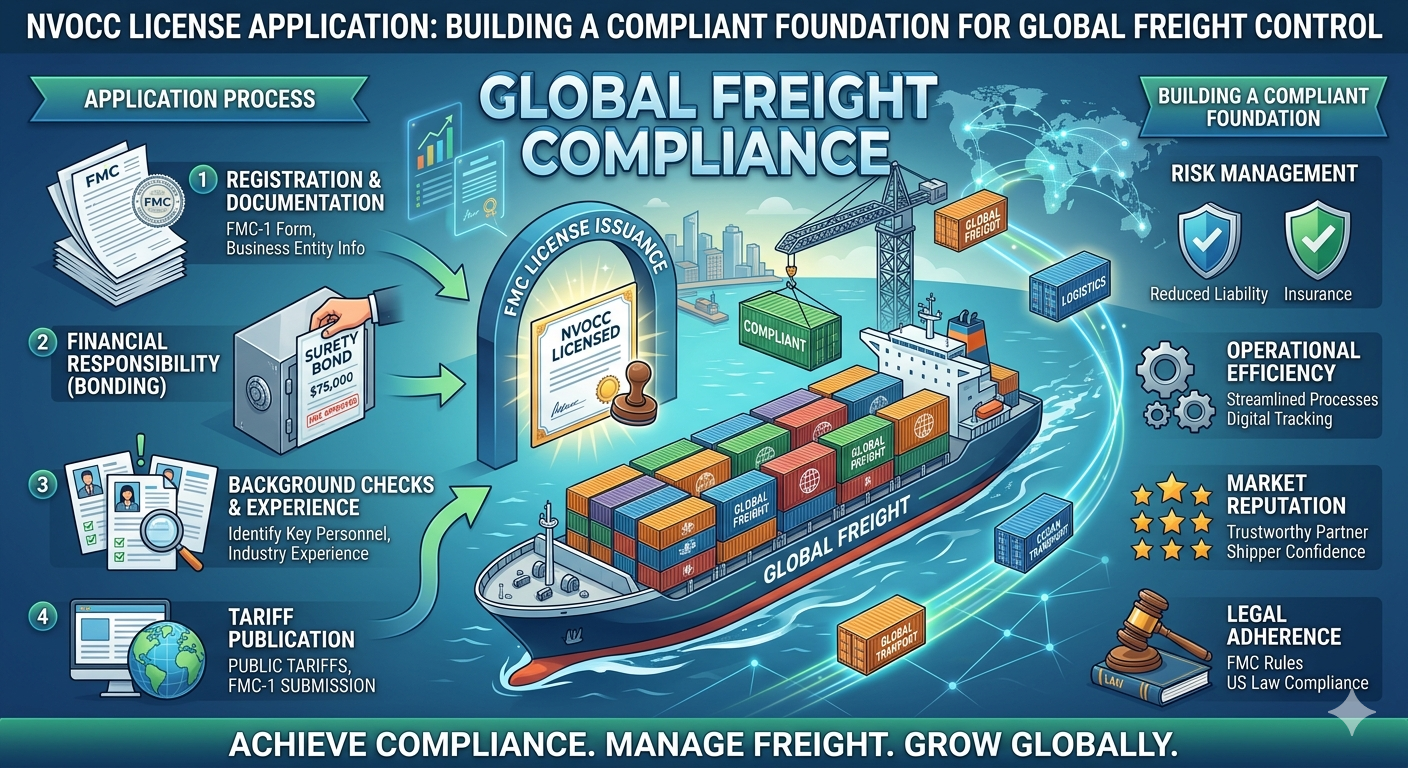
NVOCC License Application
In international shipping, control over cargo movement is not just about logistics efficiency. It is about regulatory authority, financial responsibility, and operational independence. For freight businesses aiming to operate as intermediaries without owning vessels, obtaining a Non-Vessel Operating Common Carrier license is a strategic inflection point. At American Trade Bridge, we approach this process not as a formality but as a structured pathway to long term global trade credibility.
Understanding the Strategic Role of an NVOCC
A Non-Vessel Operating Common Carrier functions as a carrier to shippers and as a shipper to ocean carriers. This dual identity allows businesses to issue their own bills of lading, consolidate cargo, and manage freight contracts independently. However, this authority comes with strict regulatory oversight, particularly in jurisdictions like the United States where the Federal Maritime Commission governs licensing.
The license is not just a document. It is a signal of compliance, financial accountability, and operational readiness. Without it, freight forwarders remain limited in how they structure services and scale their international footprint.
Why the Application Process Demands Precision
Many applicants underestimate the level of scrutiny involved in securing an NVOCC license. Regulators are not only evaluating business intent but also assessing risk exposure to the global shipping ecosystem. This means every component of the application must align with compliance frameworks.
The process typically involves:
• Establishing a legally registered business entity
• Demonstrating relevant industry experience or qualifying individuals
• Securing a financial responsibility instrument such as a surety bond
• Filing organizational and ownership disclosures
• Registering tariffs in compliance with regulatory requirements
Each step is interconnected. A gap in one area can delay or invalidate the entire application.
The Financial Responsibility Requirement
One of the most critical aspects of the application is the financial responsibility component. Authorities require NVOCCs to maintain a bond or equivalent security to protect shippers against potential losses or misconduct.
This requirement is not merely procedural. It reflects the trust placed in NVOCCs to handle cargo documentation, payments, and contractual obligations. Structuring this correctly ensures smoother approval and reduces compliance risks post licensing.
Tariff Publication and Digital Compliance
Modern NVOCC operations rely heavily on digital tariff systems. Regulators mandate that rates, charges, and service terms are published and accessible. This ensures transparency and prevents unfair trade practices.
We emphasize early integration of compliant tariff systems during the application phase. Businesses that treat this as an afterthought often face operational bottlenecks later. A well structured tariff system supports scalability and simplifies audits.
Operational Readiness Beyond Approval
Securing the license is only the beginning. The real value emerges when businesses leverage their NVOCC status to optimize supply chain control.
Key operational advantages include:
• Issuing house bills of lading under your own authority
• Negotiating directly with ocean carriers
• Creating customized consolidation strategies
• Expanding into new trade lanes with greater autonomy
However, these advantages require internal systems, trained personnel, and compliance monitoring mechanisms. Without these, the license becomes underutilized.
Common Pitfalls in NVOCC Applications
We often encounter businesses that approach licensing reactively rather than strategically. Some of the recurring challenges include:
• Incomplete documentation or inconsistent disclosures
• Misalignment between business structure and licensing requirements
• Delays in securing financial instruments
• Lack of clarity on qualifying individual credentials
Avoiding these pitfalls requires a structured approach and a clear understanding of regulatory expectations.
A Different Perspective on Licensing
Instead of viewing the NVOCC license as a regulatory hurdle, we position it as a market entry tool. It enables freight businesses to transition from service providers to logistics controllers. This shift has significant implications for profitability, brand positioning, and client trust.
At American Trade Bridge, we guide this transition with a focus on long term operational alignment. Our approach integrates compliance, financial structuring, and system readiness into a unified process.
Preparing for Global Expansion
For companies aiming to scale internationally, the NVOCC license acts as a gateway. It allows businesses to build direct relationships across the shipping value chain while maintaining control over documentation and pricing.
This level of control is essential in a market where margins are tight and competition is high. By establishing a compliant and efficient NVOCC framework, businesses can differentiate themselves through reliability and transparency.
The NVOCC license application is not just about meeting regulatory requirements. It is about building a resilient logistics identity. Every document, every disclosure, and every compliance step contributes to a foundation that supports global trade operations.
When approached with precision and strategic intent, the licensing process becomes a catalyst for growth rather than a barrier. At American Trade Bridge, we focus on turning this process into a structured advantage, enabling businesses to operate with confidence in the international shipping landscape.
